
EMF Camp: Community Spotlight
Electromagnetic Field is a non-profit camping festival for those with an inquisitive mind or an interest in making things. Ben caught up with Sam Cook, one of the organisers of this ‘hacker camp’ which will next be held in July 2026.
So tell me a bit about how EMF Camp came to be?
EMF started back in about 2011 when a load of folks from the London Hackspace wanted to go camping/make something a bit like the European Hackcamps (I think it'd been CCC Camp the year before). A mailing list and an LLC were set up then folks started looking for a site. We ended up in a park near Milton Keynes that we could set up a microwave link to a near-by data centre from, filled it with some tents we borrowed from a LARP for use for workshops/villages (folks who wanted to camp together, like the various Hackspaces) and put a bar under the M1. It was touch and go at times but we ultimately sold all 499 tickets. Once the dust settled we decided to do it again.
In the simplest terms, what is EMF Camp?
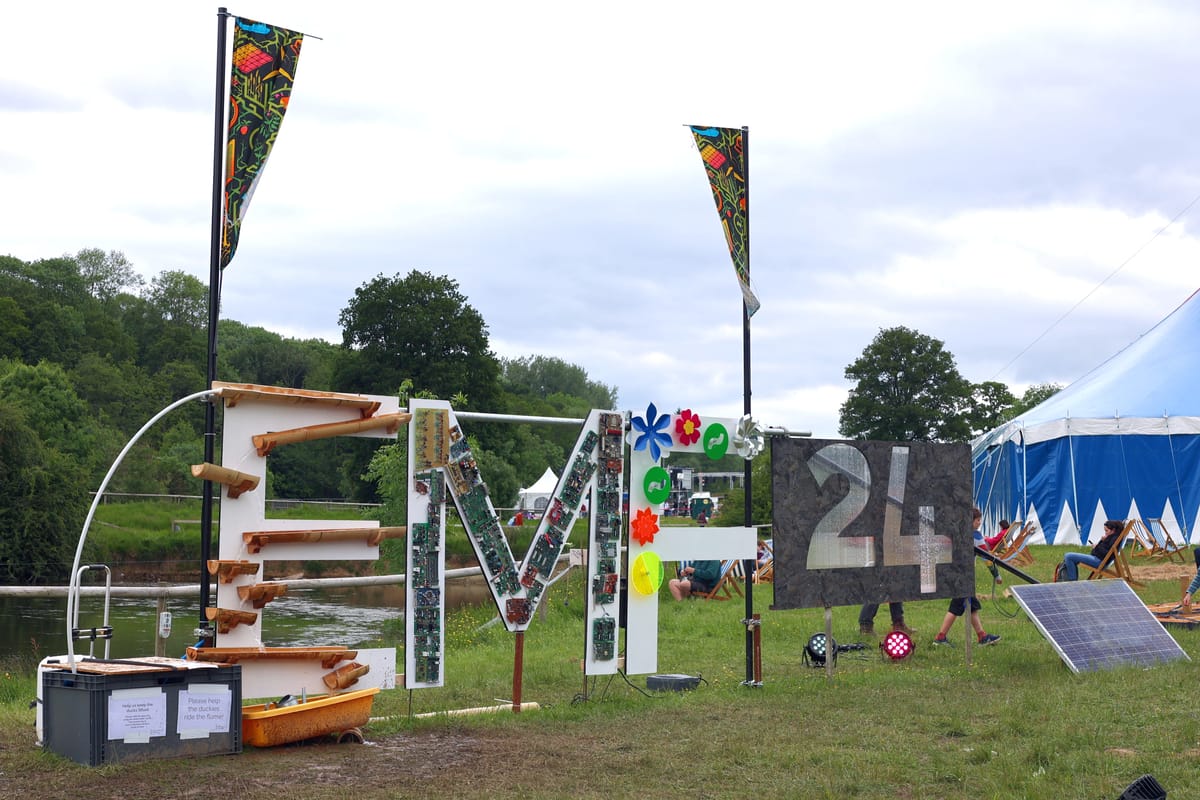
EMF is a 4-day, volunteer-run, camping festival: we host talks, music, art installations, and workshops on whatever topics we (or our attendees) feel enthusiastic about.
Do you have any big success stories?
The joke answer is not going bankrupt but it's a bit too true to really be funny (and makes a terrible answer).
A more serious answer (albeit similar) is: still running after a decade. It's been really difficult but maintaining a wholly volunteer-run organisation, especially one that goes dormant every other year, is a huge accomplishment (especially as we managed to continue after the pandemic). In any organisation loss of institutional knowledge is a big risk but this only gets worse when you're relying on volunteers and everyone is trying to remember how to do a job they last did 18 months ago. But between various flavours of wiki, shared email and chat we've gotten pretty good at it (we also have a lot of custom software for tickets and content, which is both a blessing and a curse).
The camp has a wide range of activities! How did you bring in people for such a wide range of practical/creative things?
By being enthusiastic. Any time someone asks “would EMF be interested in...” the answer is yes. We've had talks on all sorts of topics from special effects, to lock picking, to all the ways you can legally dispose of a body in the UK. Something we've really worked at is actively making EMF inclusive and welcoming. And it turns out if you do that folks from all sorts of walks of life will turn up and feel able to talk about their special interest or hobby.
It sounds (and looks) like you use a lot of technology on site. What's your tech stack, and how do you get all of that working in a field?
Which one? We have several: our website is python running inside Docker with Postgres for a database. It uses Jinja, flask & SQLAlchemy for templating, as a framework and ORM respectively.
We also self-host a lot of other software for maintaining the organisation such as: freescout for email, Mattermost for chat (previously IRC), nextCloud for file storage, grist (an excellent spreadsheet/database alternative) and hedgedoc (an ether-pad style multi-user note taking app).
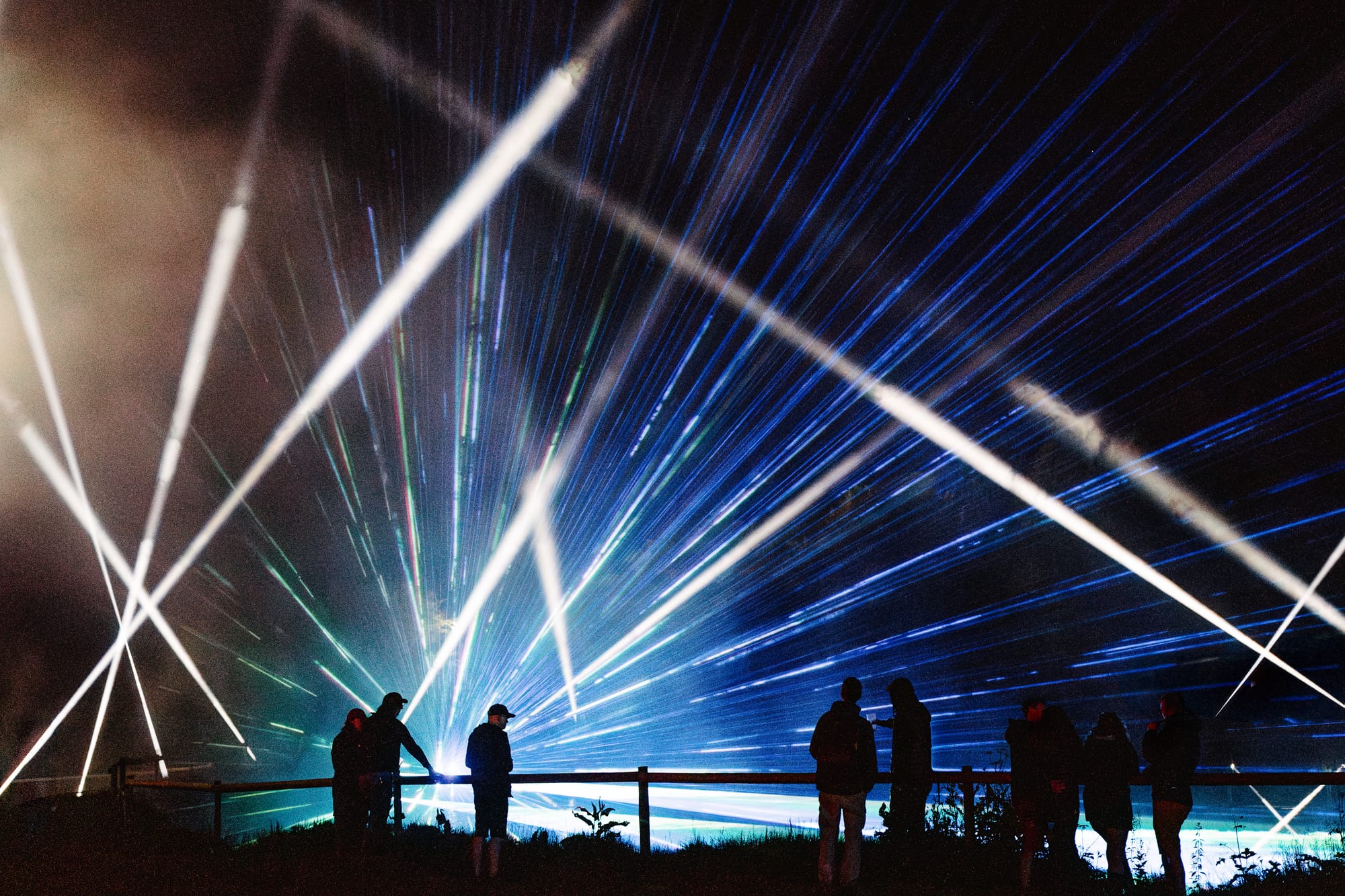
As for keeping it working in the field? Our main requirements are very good internet and power. We have a fibre connection that terminates near the site that we can hook up and from the first day of set up (about a week before the gates open) we'll have generators running. This means for the first few days we run of a couple of basic wifi access points plugged into a multi-gig fibre, but as the event nears this is replaced by a network of Datenklo (data-loo, a term borrowed from CCC) which are portable-toilets with a power-distribution box, switch and wifi access point in it. These Datenklo link back to our in-field data-centre (a hired walk-in fridge running some servers and hooked into the fibre).
The (web)site itself has its database backed up to one of servers in our in-field DC so we can run ticket functionality if the fibre goes down for some reason (we also have a plethora of hotspots for ad-hoc 5G use by organisers if need-be).
How do things work in the years between the actual camping events?
So there's a small amount of work that follows on from the event (once we're off the site): returning lost property, deleting the database, sending “see you next time” emails and so on but it generally goes pretty quiet until about a year or so before the next event when we start nailing the next dates and signing the contract. This is also the sort of time when we try to do any big upgrade work to the website and other similar maintenance pieces.
Things really start to get busy about 9 months before the event when various teams start planning in earnest: the design team will start working on the theme, the content team will figure out who they might want to invite to speak or perform and the site team start booking tents (and other big items).
Once things start rolling they just keep ramping up until the event. By 6 months out most teams (we have 30) will be meeting about once every few weeks and have multiple things to track from (content) speakers to (AV) speakers and such. It's relatively calm until a few weeks before the event when things get very busy. In the weeks before the event many of us will be working nearly full time checking things are booked, scheduled and such.
Finally about a week before the event the first people will arrive on site and start setting up the event itself. More precisely they start setting up the set-up event (HQ, a first generator, basic internet, a kitchen) then they start setting up the event. They'll also stay around for about 3 days after the event to tear it all down again.
How are you funded?
All ‘core’ parts of the event are funded from tickets: that's tents, internet, power, childcare, toilets etc. We take some sponsorship for stretch-goal items like captioning for talks or badge components (usually a sponsor will provide us parts). The overall aim is that we should be self sufficient: any profit we make goes back into the next event.
Self-sufficiency is what we all aim for! What's next on your roadmap?
We don't have a roadmap per-se. Obviously organisation for the 2026 event is well underway, this year's theme is Space, but very little of it's been announced yet. I can say though that the arcade will be back, as will the greenhouse and there'll be a new front board for the tildagon badge.
The main things we try to improve between events are organisational. Particularly in making it easier for people to step back if they need to. This generally involves trying to find people to be a second for a role to learn and making sure there's good documentation. Many of us have been involved since 2012 and, as you'd expect, in that time a lot can change for a person. Making it easy for people to step back for a month, an event, or even several is really important to the longevity of the event.
How can people get involved?
Drop us a line at [email protected] (or come to the volunteering tent during the event). We also do semi-regular shoutouts on Mastodon and Bluesky if there are specific roles that we need filling.
The event has become pretty popular, and the 2026 is sold out already. How do you deal with that kind of popularity, and do you have plans to cope with that in the future?
When it comes to setting our ticket capacity we're trying to balance three things: keeping the event community driven, making sure the event doesn't stagnate and not burning out our volunteers. This latter puts a pretty hard limit on how big we can go (as does keeping the community vibe) so it's a matter of balancing how many tickets are generally available vs how many go to the community (volunteers are issued vouchers to buy a limited number of tickets before the main sale). We already have some ideas as to how we want to set this balance for 2028 as well as improvements to the website that should make ticket sales simpler. All that being said there is a tension and there's no right answer to how we set things, but we try our best to get it as good as we can.
Is there anything else you're keen to mention?
Our CfP (Call for Participation) is open. We're looking for talks, workshops, installations and performances. Accepted proposals will be able to buy up to 2 adult tickets and any children's tickets they need. If it's something you're interested in there'll definitely be people at EMF who share your interest.
Many thanks to Sam for the interview. Find more on emfcamp.org.

Comments ()