How To Make a Game and Win and Award (Without Spending or Making a Lot of Money)
This summer, my game Trans Theft Horso won an award. Here's how you could make a game and prosper magnificently without spending much money. A practical and philosophical guide, looking mainly at RPG Maker (but other options are equally valid).
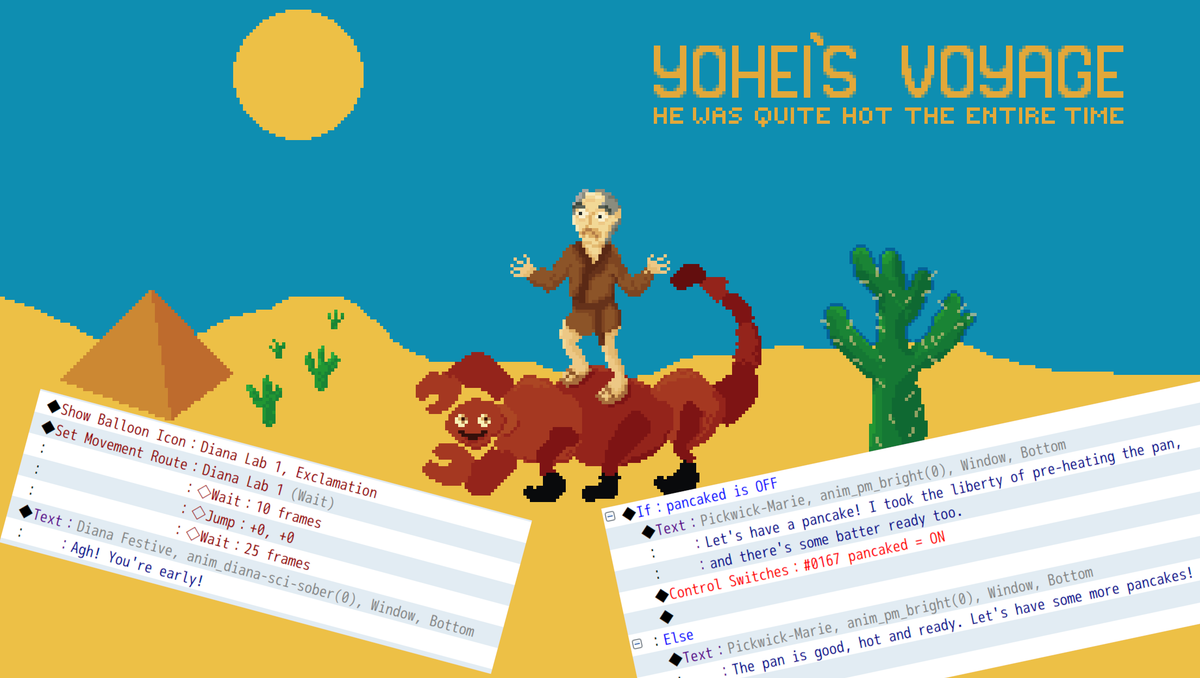
My grandfather had an excellent phrase for a passionately well-wrought piece: “I put my soul into it”. A cake seemed all the more enticing and mystical if you knew the baking process included his soul as an ingredient. I believe in this philosophy, and lately it has served me well. Last month I was extremely fortunate: my game Trans Theft Horso won one of the most prestigious awards for an indie or art-house game, the Most Amazing Game Award at Berlin’s A MAZE Games and Playful Media Festival. This was a huge surprise, but seems to have happened for a reason: I put my soul into the game.
In this guide, I'll walk you through planning your game, getting the right software – my focus is on RPG Maker, but you might prefer other apps – how to make your game work, and how to make it good.
If I can prosper magnificently on a minimal production budget, you probably could too, if you go at it with gusto. I want to use my fifteen minutes of fame to give some advice on the how and why of game-makery, since I see no reason why you (in particular) couldn't do exactly what I did, so long as you have some passion, some patience and a fair amount of time.
This guide comes in four parts: having a clear vision, making a start with the right software, understanding how games are constructed, and how to make your game something really remarkable.
Part 1: Vision!
What game do you want to make, and why?
One Vision
Before you get stuck in, let me say something obvious: it really helps to have a clear vision for what you want to make. Some people have the concept and then choose what tools they’re working with, but others decide what tools they’re working with (say, RPG Maker MZ) and then look at what it can do and build a game concept around that. Others start with one of those methods but then turn a corner, rethinking their earlier plans. I like it when that happens: A good vision is adaptable.
At some point you have to get passionate. You have the tools, you have an idea for a trajectory, but you have to get hungry for it. A driving hunger which will sustain your interest in the project. That could be making a game you're desperately keen to play, or one you feel sure will entrance an audience. In either case, you have to care, or at some point the bottom will fall out of your joy, and vice-versa.
By all means play around with the software to begin with, follow tutorials and paddle in the shallow end, but once you’re ready to start making a game for some kind of release, it pays to really have a story and a vision in mind and (optionally) a song in your heart — or why are you even doing this?
Why are you even doing this?
That’s a good question as well! Are you making an RPG for RPG fans, a western for western fans, a queer game for the queer community, or something ultimately for yourself and your friends? They’re all discerning audiences with different needs and hopes, so if you answer ‘all of the above’ you may fall between stools. As Leonard Nimoy warns in Civ IV, “If you chase two rabbits, you will lose them both”. He may not have been the first to say this, but he said it in a rich, round voice.
(In terms of audiences, if you answered ‘none of the above’, you’re making art for art’s sake, the purest expression of art, and some festivals may well dig it.)
What about making games for a quick buck? I’ll look at this again later, but the short answer is that the bucks aren’t quick, and may not be forthcoming at all. There are ways to prosper financially, but they don’t often intersect with (a) making the game you have in your heart and (b) being an absolute beginner.
I’ve spoken to people who are in the more commercial/profitable side of game development, and they speak in slightly embarrassed tones of the clicker games they make for mobiles. There’s a large audience for that. It may be the ‘personal injury lawyer’ of the games industry: you can find steady employment there, but it won’t fulfil your heart’s desire.
That's enough pondering for now. Let's get our hands on some tools and start making a game!
Part 2: Software
My tools of choice: RPG Maker MZ and Aseprite
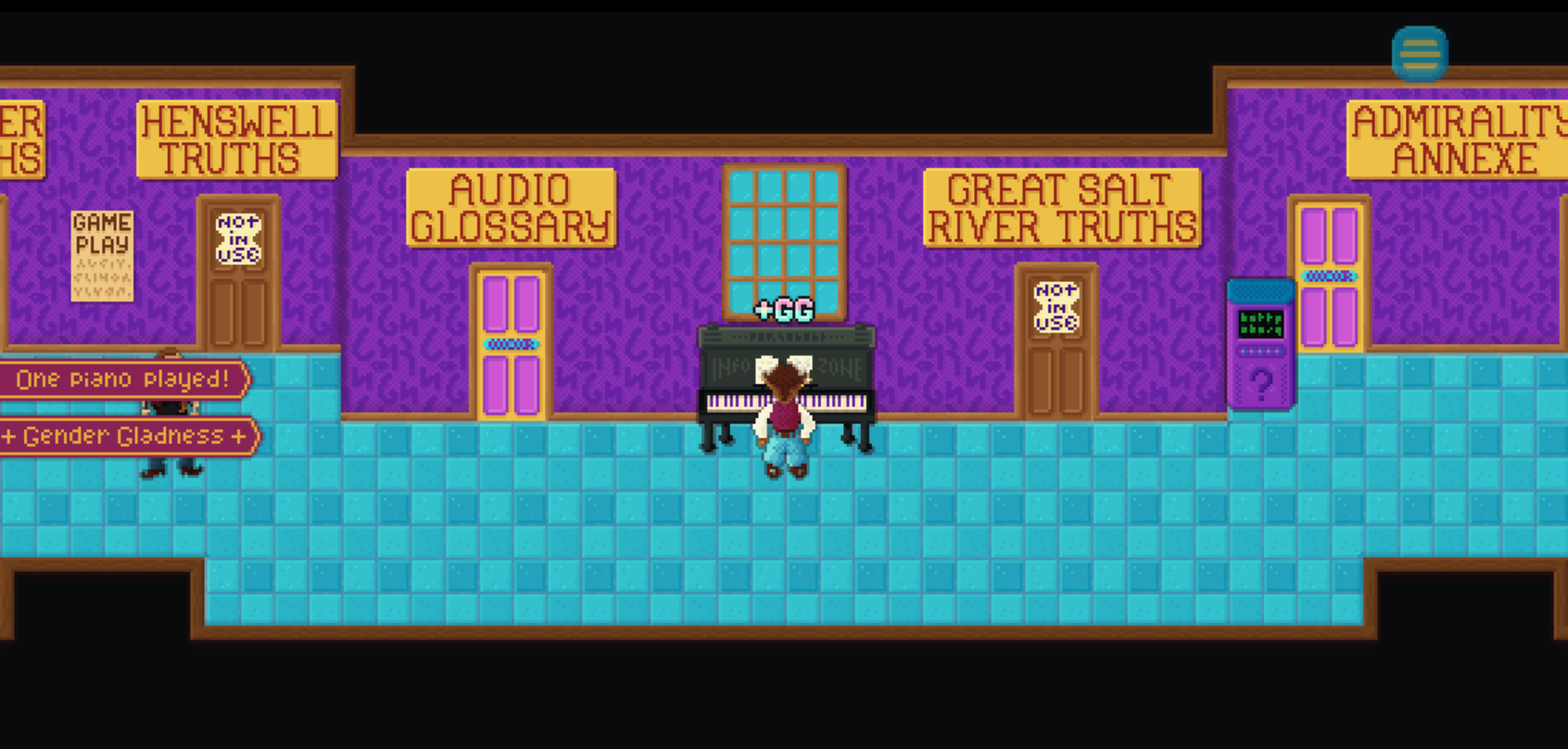
RPG Maker, specifically
I'm going to speak about the software I used, but almost everything I say will be applicable to other apps and methods, so if the game which bubbles away in the cauldron of your heart is in a different genre, feel free to stick to the spirit, rather than the letter, of my advice.
RPG Maker is a fairly affordable tool, dipping down to £30 in its frequent sales. It’s also ubiquitous: there are almost 4,000-RPG Maker-made games for sale on Steam. It’s easy to use, and – one of the reasons which drew me to it – can export your game for Mac and PC. Linux and Android too, if you plan ahead. Other game-making systems may be cheaper, better or easier to learn, but none is all three at once, making this a solid start.