What If We Made Money at the Intersection of Art and Technology?
just kidding ........ unless ?? 👀 💰 💻 🧑🎨. A run-down of the 15 ways we could think of to get funding for your project: from the capitalist (venture capital) to the grassroots (direct donations). We cover the various types of community, arts, research and business funding, and even mention DAOs.
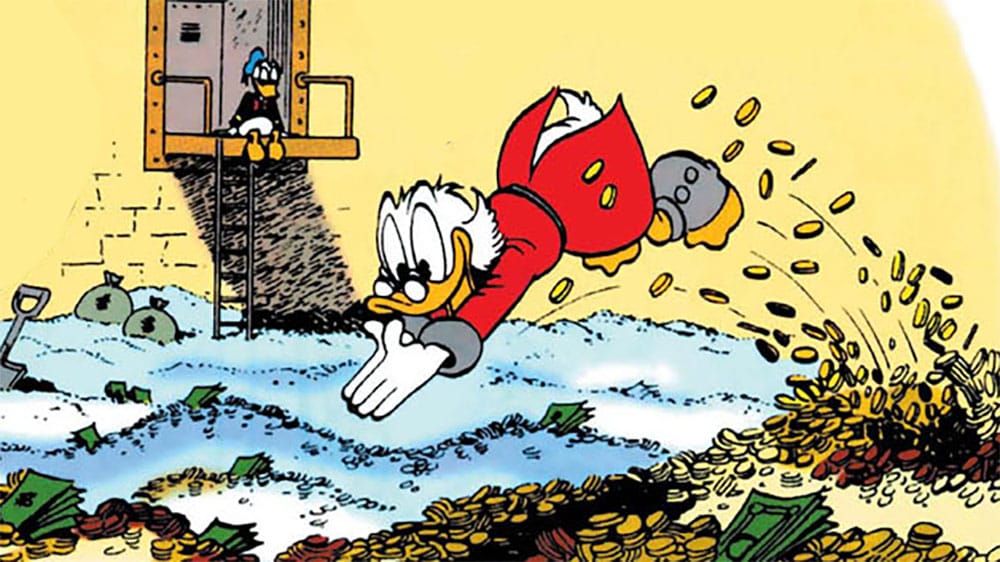
Perhaps my hottest take at GFSC is that the revolution needs a business plan. Money in activism is like cars: no-one has one, everyone moans about them, but everyone needs a lift. Almost every organising meeting I’m in, someone will say “someone should do a funding bid” – ok, so who? And for what?
Injecting money into often-fraught social contexts sometimes feels akin to turning on the big light: it’s so much easier to bitch about problems in the dark than have to start actually making a plan to clean up the empty pizza boxes and upturned ashtrays. If we are going to develop commons though, we just kinda need to get on with it, and face the uncomfortable conversations it brings.
Currently I feel we have a sort of magical thinking in leftist places when it comes to building the world we want to live in, as if somehow, if we organise just right, do the right kind of outreach, get the right kind of donations page up, that somehow things will Magically Change and the resources will materialise. Despite the fact that almost everyone is dealing with extreme levels of multi-year burnout, the cost of living crisis, and more and more of our lives being rented from billionaires, there’s just a weird lack of pragmatism when it comes to getting things done.
Unfortunately, I don’t have any clean answers for you on how to get it for your project. No money comes entirely without strings and all of it requires a commitment to a certain path. I’ve explored a ton of these over the years and personally raised over half a million in funding bids and invoiced hundreds of thousands in client work so I do know a little what I’m talking about: but these are rookie numbers in the grand scheme of things. So please enjoy a listicle of some methods out there I’ve explored, with an enormous grain of salt.
Table of contents
- Arts Council England Project Funding
- Arts Council England: Develop Your Creative Practice (DYCP)
- Community grant funding
- Community share offers
- DAOs / Cryptocoins
- Direct donations and memberships
- Innovation / business funding
- Private philanthropy
- Research funding
- Selling goods
- Selling services
- Social investment
- So what should I actually do?
- Tech grant funding
- Venture capital (VC)

Venture capital (VC)
- Goal: creating a business backed with technology that can be sold in 3-5 years, at which point you will cash out
- Pros: a lot of money and enough time to do something properly from the start
- Cons: you are mainlining capitalism in its purest form with all that goes along with it
- Examples: YCombinator, Bethnal Green Ventures, Sequoia Capital
- KPIs: users, monthly revenue, app installs
- Money: ££££££
Let's start with the big one. “The Startup” is the business model that changed the world but gets little critical analysis. A startup, in its purest form, is a high risk high reward engagement in rawdogging capitalism. The goal is to take a small team of highly paid engineers and produce a vertically integrated company and app that has the potential to scale into the next global phenomenon, like WeWork or Uber.
Rather than a traditional business model where the business provides a job for life for the founders, the goal is to sell the entire company after a few years to a big-five tech company via an IPO and at that point, get extremely rich. WeCrashed is a great dramatisation of this.
What this means for you is that you need to find a suitable VC fund and make a convincing pitch deck that tells the investors why they should invest in you. YCombinator, one of the most infamous funds, give every startup a $500k initial investment for example. Once this money starts to run low you can go for additional investment rounds that are called Series A, B, C and so on.
In terms of access to capital and potential for growth there's nothing quite like it. You can expect to be massively resourced and have access to very qualified people and have dedicated time to work without worrying about funding. The flip side is though that the only reason anyone is here is to make money, with any social benefit being almost irrelevant outside of its ability to make money, so you can expect to be working with the worst scumbags out there. You can also expect to be working all hours as you now need to worry about things like quarterly reports and monthly active users. The flip side is that you will be in a cohort with lots of peers and have a ton of support to make a thing.
Personally I'd love to give this a go one day despite all this so I can give more qualified feedback!
Social investment
- Goal: creating a social business that produces social outcomes
- Pros: Potentially highly sustainable Realpolitik
- Cons: Most of your KPIs require you to do direct surveillance of poor people
- Examples: Big Issue Investment, Key Fund, UnLtd
- KPIs: Weird measures of sociability, health, happiness, etc
- Money: £££££
Quantifying social outcomes is fucking brutal. We all know social outcomes are important but the exact accounting for them always just sounds super weird. For example, the Scottish Federation of Housing Associations value "Talk[ing] to neighbours regularly" at £4,511 per person per year. So theoretically if you start a WhatsApp group for your street and get 9 other people in it you've just created £45,110 of social value. Well done! Can I get my cheque please?
The social investment world sits in this odd space between charity and business. You're expected to make money, but also prove you're making the world better. A consultant at a big charity thinktank once told me that said thinktank had been around for 40 years but still had no idea how to marry these two models. This means you need to spend a lot of time measuring and quantifying your “impact” on society which is as vague as it sounds.
The upside is that once you're in this world, the money can be quite stable and the investors genuinely do care about outcomes beyond profit. The downside is that proving those outcomes often means collecting data on vulnerable people in ways that can feel pretty uncomfortable – do you want to be asking people for their postcode and to fill in an evaluation form all the time?
Community grant funding
- Goal: Delivering an on-the-ground community development project
- Pros: Once you have the funding it's very hard to lose it
- Cons: Writing them is an art in itself, very low acceptance rates, very long turnarounds, boom and bust
- KPIs: Generally annual social impact reporting to funder
- Examples: National Lottery Community Fund, Comic Relief, Esmee Fairburn, Paul Hamlyn Foundation
- Money: ££ - £££££
Hello friend! You can read the rest of this rundown, including 12 other kinds of funding, by subscribing to our newsletter with the button below. It's free, only takes a minute, and stops our content being crawled by the AI slop bots. Thanks for reading this far!