
Geeks for Social What? Our year of explorations and beginnings
All years in recent memory have been grievous and alarming, but here's what we did to make 2025 better and build for 2026. A run-down of GFSC's projects, articles, and methods for making technology which can strengthen communities.
Five years ago, I calmed myself with the words ‘What a silly year!’. Half a decade later, this still applies. A perennial truth, like the title ‘Things Can Only Get Better’.
That's where you come in, and me, and all of everybody else. Many folk are working to transition the year, the world and society from ‘silly’ (derogatory) to ‘silly’ (charming), or at least to viable, livable and blessèd.
What did we get up to this year?
What have we actually done this year? Let me count the ways (and then list them in rather more detail, with links and descriptions):
- 23 people have volunteered their time with GFSC, working on everything from the PlaceCal and Trans Dimension codebases, to server migration, writing blog posts, running livestreams, helping with volunteer coordination, and community management.
- 33 articles were published on this grand spankin' new community blog, where we introduced 8 new voices.
- 3 Twitch.tv streams (variously on making stickers, PlaceCal and Mapped).
- Much growth in our following and our community across the six (!) social media platforms we use (see the footer for those!).
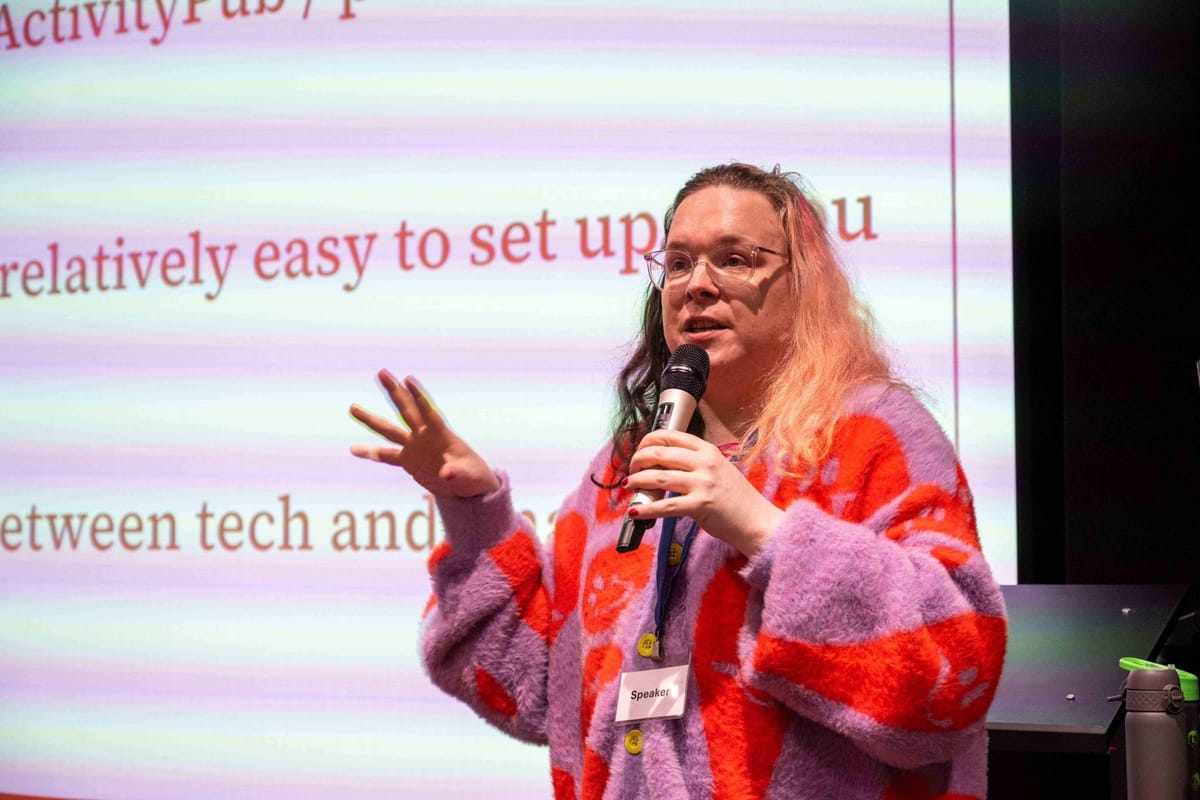
- Kim variously spoke about our renewed mission at the Tony Benn Legacy Conference at the University of Westminster, the Information Lives in DIY Culture Conference at Manchester Metropolitan University, in Edinburgh at the Queer Data Showcase, and at the Open Knowledge Foundation's Tech People Want conference. GFSC were also guests on Red Planet in January. (Surprise: the latter is about Earth, not Mars, but communist).
- This was a list of numbers, but the novelty of counting ran out.
Many thanks to everyone who volunteered or donated towards the work we do, and to all of you who shared our work with their friends and colleagues!
Our beloved team of misfits and weirdos
Let's turn to the blog, since that's what you're currently reading. The goal this year was to get a range of people who use technology in wildly different ways to start talking about their practice, especially if they didn't think they were doing ‘real’ technology, thought that what they were doing was boring, and double especially if they thought they're not really an expert at this, actually, and someone else is doing it better. Imposter syndrome is very real for all of us and we have done more hand holding than a mannequin factory worker.
Here's the total roll call of new authors:
- Developer and polymath Olu Niyi-Awosusi wrote about being Olu, on a career in code and hopes for technology beyond the shadow of Big Tech.
- Teacher and researcher Emma Charleston wrote about doing many things, including academia, freelance consulting and design, not to mention life! Emma later gave us thoughts on accessibility and design.
- Comedian Ava Riverside wrote about being Ava Riverside, and making shows despite society increasingly hostile to trans folks.
- Creator and communicator Micah Alex wrote about design and the place of technology in rural communities, among many other things!
- Streamer Sean Morley wrote about how idiosyncratic live art is praxis. Sean also gave us some thoughts on Crowdwork as a Design problem, and hosted our first stream.
- Video artist and blogger Petra Szeman told us about the murky border between the real and the virtual, and daunting yet inevitable prospect of model collapse.
- Person Ben Swithen wrote about transphobia and the culture war in voluntary positions, and how this led to game design and an unexpected award.
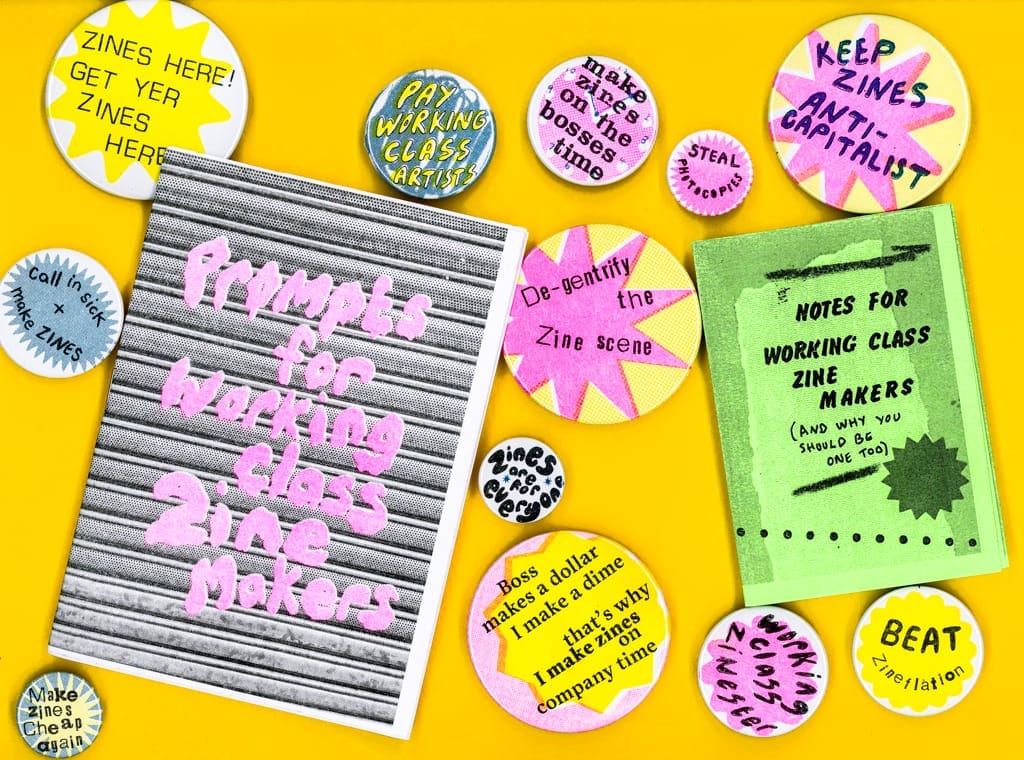
- Zinester Vicky Stevenson told us all about Zines, which are for everyone, and about Pen Fight Distro, a book shop, venue and tiny press.
What's the overall vision?
The vision at the core of Geeks for Social Change has been honed over the year. At our heart it's as simple as:
- There are community groups
- There is technology
- We help community groups make the most out of technology.
To put it another way, our goal is working with community groups to make technology that produces community, as opposed to the things more commonly produced by corporate technology (‘taking all the money’ and ‘global fascist superstate’ being quite high up the list). ‘Community’ can be a vague term, but Kim's working definition is “people you don't get paid to hang out with”, which is the best I've ever heard it defined.
Many communities are tough to be members of, in a time of rising discrimination, temperatures and other existential threats, and a time where billionaires (whether political or tech) have control over almost every part of our waking lives. As we discussed on our very first post: what's the plan for the groups facing very real harm like trans people, Palestinians and migrants, or just people who want to survive on planet Earth, to survive the next five, ten or twenty years?
Rather than simply despairing at the rapid slide into global oblivion, we have doubled down on identifying and supporting the millions of day-to-day efforts communities across the country take in trying to improve their corner of the world. We believe a better world is possible but we have no idea what it looks like, only some idea of the direction towards it. In the words of the world’s most famous Santa impersonator, Karl Marx:
The philosophers have only interpreted the world in various ways; the point, however, is to change it.
Here are some pieces from the blog on how we might do exactly that:
Kim wrote about how Geeks for Social Change got to where it got to. She also wrote about the loudness and loneliness of life, and the way technology has pushed us apart, before turning to a hope for social reunion. This led into GFSC's plan to build bottom-up resistance to billionaire technology.
We also shared articles on particular Internet blights: the problems of Meta, and the way queer life is almost entirely based in apps and services belonging to the titans of capitalism, and whether we can seek a more community-owned option. Micah Alex gave us a deep dive into some thoughts on how we might resist YouTube's algorithm and its claims on our very eyes. Kim explored the logistics of leaving not just Spotify, but billionare-owned streaming platforms as a whole. These giants of the Internet are not the only way.
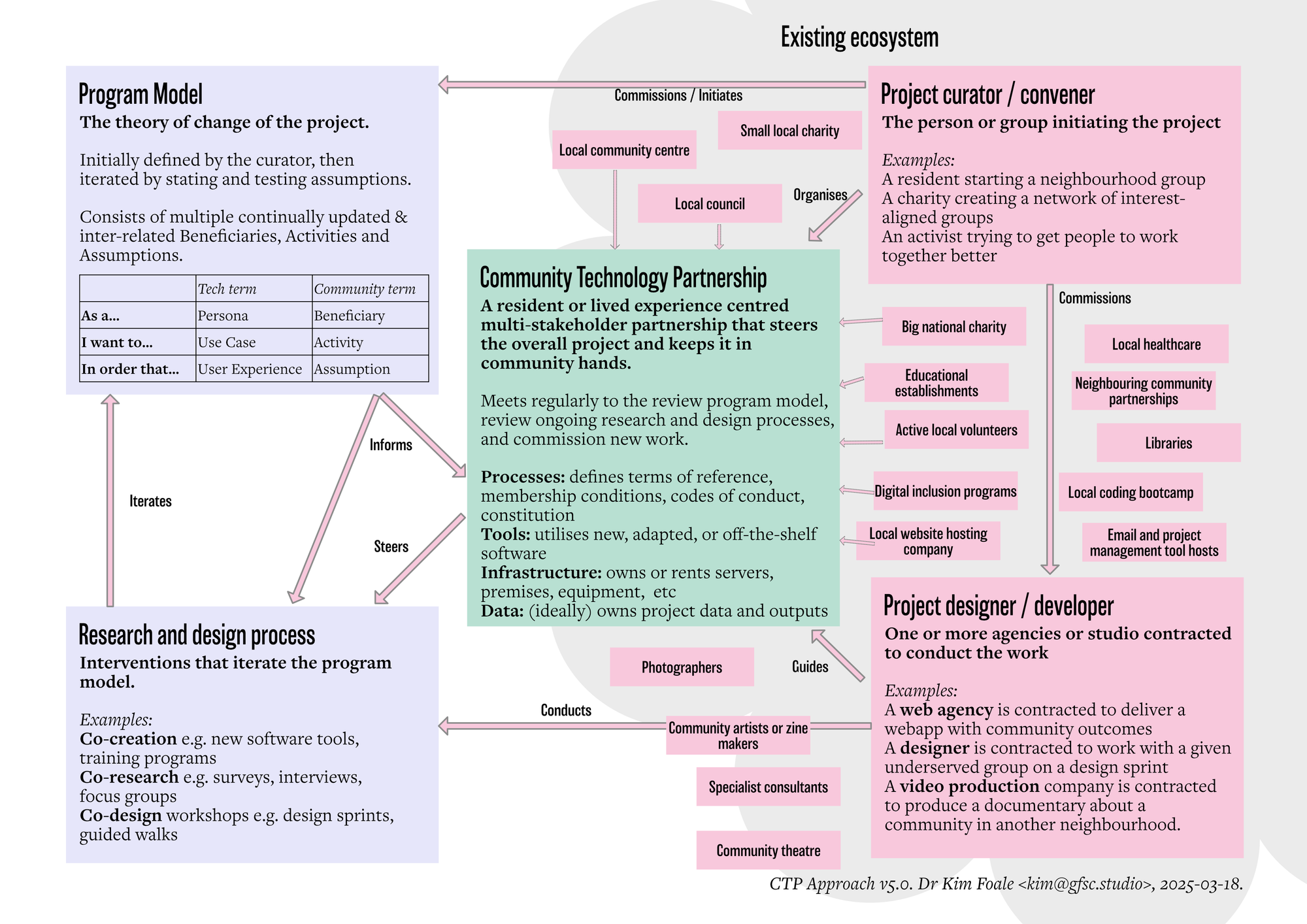
We wrote a how-to guide on how to establish community technology partnerships, which is now forming the basis of our approach to technology as a whole. Just as practically, here are pieces on how to make a personal website in practical step-by-step way, and (as a ‘how not to...’) how consensus decision-making sucks as a default cultural expectation. Emma wrote some thoughts on accessibility and graphic design, and Sean had a Big Think about using highly interactive (some might say overly interactive) Twitch streams to explore democratic ideas.
Supporting the UK left-tech ecosystem
For such an ambitious journey we surely need friends and comrades, and we've spent a lot of this year making them. To do this we've been having some meetings in the background about how we can better coordinate, started interviewing people on ‘community spotlight’ posts, and started a livestream.
Our friends at Common Knowledge built a tool called Mapped to help political organisers, well, organise. The VOD of the stream What if a Database was a Map? is available today on YouTube.
We explored what a community digital commons could look like. Much of this looked at PlaceCal, which aggregates and displays things in a digital space. The ‘Cal’ in ‘PlaceCal’ is calendars, and the ‘place’ is just what you might expect. (I spent three months mistakenly pronouncing this to rhyme with 'fecal', but it's a far more good and edifying thing than this would suggest).
We interviewed our friends at Karrot (not the vegetable), Mastodon (not the pachiderm) and Resilience Web (neither a vegetable nor an elephant, but there is less room here for ambiguity here). We also heard from the Vote Out Covid campaign, and spoke with Dr Zoyander Street about Trans Digital Archiving. That is, digital archiving which is trans, not archiving which is trans-digital, and somehow exists beyond the digits. Or is it both?
Next year we will be building up this fledgling network of tech creators and continuing to do our community journalism bit – do get in touch if you'd like to be part of it, or you want us to interview you!
What's next?
Did you enjoy what we worked on this year, and is there anything you'd like to see or hear more of? This year has been one of growth and action in various encouraging directions – but what will we do (and what should we do) in 2026?
We're all volunteers, and we appreciate, and everything we achieve is the result of, people's donated time and funds. Would you be interested in making donations to support our community work? Not usually a welcome question, but a society where nobody asks for help is no kind of society whatever. We can only prosper by working together as a community. Find out the ways to do it here.
And finally, your input would be a great boon here, dear reader. What community groups should we be working for? And what software should we using? What are the projects and prospects in need of community and communication? This is a good time to speak out, stand up and get involved. But that's true all the time. Nonetheless, let's make it a good one. Let us know in the comments.
See you in 2026,
The Geeks for Social Change Team <3

Comments ()