
NOID: No One Is Disposable
Ben spoke to No One Is Disposable, a community of people who believe nobody deserves to be exiled or shunned by society, and that to heal and grow means being given the opportunity to make amends.

Hey NOID! Can you tell us a little bit about the project and how it started?
No One Is Disposable is a website and Discord-based online group focused on helping people who have been isolated or ‘cancelled’ move through the trauma that comes with harmful community ostracisation.
NOID started from a group of people who were tangentially connected to anti-carceral and anti-cancel groups online, and wanted a space that allowed for personal development and growth but focusing on this from a left-wing perspective. It’s also a space where people who have caused harm but had no recourse or opportunity to express regret can learn and engage in dialectical analysis of their behaviours with support. We support this desire to change or engage in restorative justice processes.
What’s reception for the project been like?
Most of the people in the Discord seem to really appreciate the space. It’s somewhere that people who have been accused of harm, or who feel harm they’ve caused has been exaggerated out of proportion, can vent about the knock-on harm that comes as a result of that. Often when people have been told that they are a ‘danger’ or an abuser, or gaslit into thinking conflict they’ve been involved in is abuse on their part, there can be a deep shame and belief in that gaslighting. Watching people reject that and welcome others who’ve suffered from it too can be really powerful.
What resources do you share?
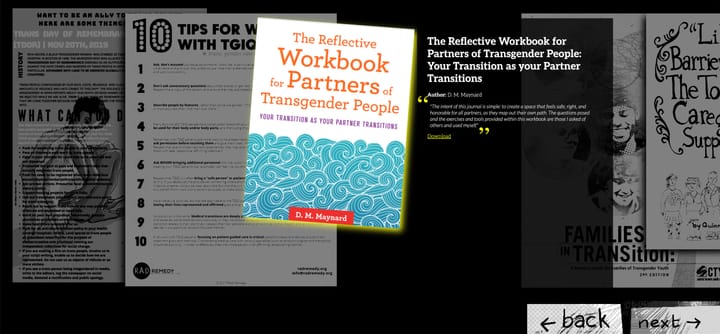
We have a website, https://nooneisdisposable.org/, which has a diverse range of writings, musings and art made by and for people whose communities have atttempted to dispose of them. The volume of information out there, even from left-wing sources, sadly suggests how broad of a problem harm-exaggeration and carceral attitudes can be on the left.
What tech do you use and how do you like it?
Mainly our group works on Discord at the moment which is completely fine for the purposes of organising group calls, and providing an online space for people to vent, offer advice, support and more.
As someone transfeminine I often find people in activism are anti-carceral in theory but not in practice. How can we make trans movements feel like places of safety?
Well, not being trans I wouldn’t like to speak for trans people here, but I have most consistently observed trans women to be the most targeted of all demographics when it comes to cancellation. There is a broad acceptance that if a trans woman is labeled a predator, that it just must be true, even if these accusations come from cisgender people – and it really just hit me, even as a cis bi guy when I saw this – what are we doing? This is TERF shit, you know?
I see the same thing happen when white activists who attend anti-fascist counter-demos exhibit extremely common racist behaviours towards their racialised comrades. I think that its the same sad issue of white cisgender people simply not seeing their privilege, nor are they willing to do the internal work to address whatever prejudices they have to get better. Activism in the imperial core is led by ego, not by solidarity – and that’s a fundamental thing that needs to change. I fear it will take some time to achieve this. That’s my advice for the broader activist movement – but as I say it’s not my place to speak for the trans movement.
How can people get involved? Is there anything people can get on with on their own?
I think I speak for most of us in the org when I say don’t be afraid to advocate for someone. By this we don’t mean absolutely deny any and all accusations leveled against someone: but advocate for their continued inclusion, advocate for a restorative process, advocate for uncomfortable conversations to happen and remind people that everyone, yes everyone deserves liberation and solidarity.
One of the most difficult parts about being cancelled is the isolation, and the sudden realisation that your comrades are in fact, not your comrades: they aren’t even your friends and don’t want to be seen in public with you. We also encourage people to learn about and try to educate people on the phenomena of ‘wreckers’. Most of the situations where harm is exaggerated particularly in activist spaces is by heavily emotionally unregulated people who use activism as a mental health resource. What we mean by that is people who let their ego and their personal feelings to take precedence over whatever it is the org is supposed to be achieving.
What plans do you have for the project next?
We are slowly moving towards a place where we can be more public about what we do, as even associating with cancelled people can cause cancelation by association and further harm. I’ve personally been thinking about ideas for an Instagram or a YouTube channel where we can showcase some basic infographics about the issues with carceral culture on the left, but I’m sure you can imagine a bunch of traumatised people trying to organise specifically around their trauma and others’ similar trauma can be extremely overwhelming sometimes. Give us a bit of time and we’ll come up with something!
Thanks for NOID for agreeing to the interview. You can find the organisation at https://nooneisdisposable.org/
Comments ()